
Grammar can feel overwhelming at times — especially when terms like “predicate adjective” pop up. But here’s the good news: once you understand what a predicate adjective is and how it functions in a sentence, you’ll start spotting them everywhere. Whether you’re a student brushing up on English grammar, a teacher looking for a clear explanation to share, or simply a curious learner, this guide breaks it all down in plain, accessible language.
What Is a Predicate Adjective?
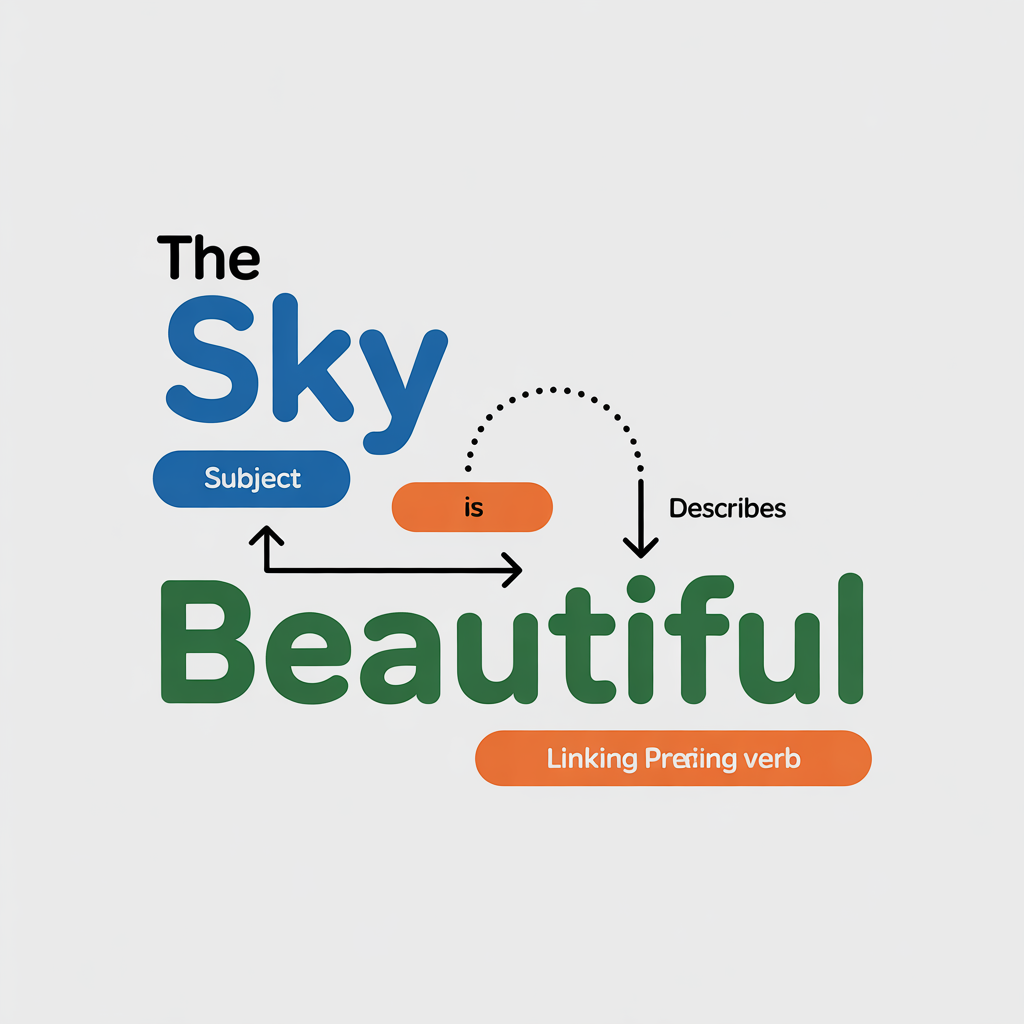
A predicate adjective is an adjective that appears in the predicate of a sentence — that is, after a linking verb — and describes or modifies the subject of that sentence. Unlike attributive adjectives, which sit directly in front of the noun they describe, predicate adjectives are separated from the noun they modify by a verb.
Here’s a simple example to illustrate:
- “The sky is blue.” — Here, blue is the predicate adjective. It follows the linking verb is and describes the subject the sky.
Compare that with an attributive adjective:
- “The blue sky.” — Here, blue sits directly before sky and modifies it without a linking verb.
Same adjective. Different position. Different grammatical role. That’s the key distinction.
Understanding the Predicate: A Quick Refresher
Before going further, it helps to understand what the predicate of a sentence actually is. Every complete sentence has two main parts:
- The subject — who or what the sentence is about.
- The predicate — what is said about the subject. This includes the verb and everything that follows it.
For example, in the sentence “She looks tired,” the subject is she, and the predicate is looks tired. The adjective tired lives inside the predicate, which is exactly what makes it a predicate adjective.
The Role of Linking Verbs
Predicate adjectives cannot exist without linking verbs. A linking verb connects the subject of a sentence to a word that describes or identifies it — rather than describing an action. The most common linking verb is to be in all its forms:
- am, is, are, was, were, been, being
But many other verbs can also function as linking verbs. These include:
- Sense verbs: feel, look, smell, sound, taste
- State verbs: appear, become, grow, remain, seem, stay, turn
Here’s a practical tip: if you can substitute one of these verbs with a form of to be and the sentence still makes sense, the verb is likely acting as a linking verb — and the adjective that follows is a predicate adjective.
Example:
- “The soup smells wonderful.” → “The soup is wonderful.” ✓ — wonderful is a predicate adjective.
- “She smells the soup.” → “She is the soup.” ✗ — Here, smells is an action verb, not a linking verb.
Predicate Adjective Examples in Sentences
Let’s look at a wide range of examples to solidify the concept:
With the Verb “To Be”
- The children are quiet today.
- That movie was incredible.
- She is nervous about the presentation.
- The answers were correct.
With Sense Verbs
- The bread smells fresh.
- His voice sounds hoarse.
- The fabric feels rough.
- The music sounds familiar.
With State and Change-of-State Verbs
- She seems confused.
- The situation grew worse.
- He remained calm throughout the crisis.
- The leaves turn golden in autumn.
- The milk went sour.
With “Become” and “Appear”
- The task became impossible.
- The suspect appeared innocent.
In each of these examples, the adjective follows a linking verb and tells us something about the subject — that is the defining hallmark of a predicate adjective.
Predicate Adjectives vs. Predicate Nominatives
It’s easy to confuse predicate adjectives with a similar grammatical structure called a predicate nominative (also called a predicate noun). Both follow linking verbs and refer back to the subject — but they are different parts of speech.
- A predicate adjective is an adjective — it describes the subject.
- A predicate nominative is a noun or pronoun — it renames or identifies the subject.
Predicate adjective: “She is brilliant.” (brilliant = adjective describing her)
Predicate nominative: “She is a doctor.” (doctor = noun renaming her)
Together, predicate adjectives and predicate nominatives are often referred to as subject complements because both complete the meaning of the subject through a linking verb.
Predicate Adjective vs. Attributive Adjective: What’s the Difference?
This is one of the most common areas of confusion, so let’s look at it closely. Both types of adjectives describe nouns — but their position in the sentence differs significantly.
| Feature | Attributive Adjective | Predicate Adjective |
|---|---|---|
| Position | Before the noun | After a linking verb |
| Requires a linking verb? | No | Yes |
| Example | The happy dog ran. | The dog seems happy. |
| Part of the predicate? | No | Yes |
It’s worth noting that some adjectives can only function as predicate adjectives. These are called predicative-only adjectives. Examples include:
- afraid, alike, alive, alone, ashamed, asleep, awake, aware, content, glad, ready, sorry, unable, well
You would not say “the afraid child” — but you would say “the child was afraid.” These adjectives are always used predicatively.
Conversely, some adjectives can only be attributive:
- main, mere, only, utter, former, latter, inner, outer, elder
You would say “the utter disaster” — but never “the disaster was utter.”
How to Identify a Predicate Adjective: A Step-by-Step Method
If you want to test whether an adjective is functioning as a predicate adjective, follow these simple steps:
- Find the verb. Identify the verb in the sentence.
- Determine if it’s a linking verb. Ask: does this verb connect the subject to a description, or does it show action? Try substituting it with a form of to be.
- Find the adjective after the verb. What word follows the linking verb and is an adjective?
- Check if it describes the subject. Does the adjective modify the subject of the sentence (not an object)?
If all four steps check out — you’ve found a predicate adjective.
Example: “The classroom felt stuffy.”
- Verb: felt
- Linking verb? “The classroom was stuffy” ✓ — Yes.
- Adjective after the verb: stuffy
- Describes the subject? stuffy describes the classroom ✓
- Result: stuffy is a predicate adjective. ✓
Compound Predicate Adjectives
Just like other parts of speech, predicate adjectives can come in multiples. When two or more predicate adjectives describe the same subject through the same linking verb, they form a compound predicate adjective.
- The weather is cold and wet.
- She seemed tired, anxious, and overwhelmed.
- The room felt dark and uncomfortable.
Each adjective in these compounds still functions as a predicate adjective — they all follow the linking verb and describe the subject.
Predicate Adjectives Modified by Phrases and Clauses
Predicate adjectives can also be followed by modifying phrases or clauses that add more detail to the description. This is common and completely natural in English.
- She is proud of her achievements. — (proud is the predicate adjective; of her achievements is a prepositional phrase modifying it)
- He seems eager to help. — (eager is the predicate adjective; to help is an infinitive phrase)
- They are certain that she will win. — (certain is the predicate adjective; that she will win is a noun clause)
In all of these cases, the core predicate adjective is still the descriptive word that follows the linking verb — but its meaning is expanded by additional information.
Why Do Predicate Adjectives Matter?
You might wonder: why bother learning about predicate adjectives? Here are a few compelling reasons:
- Grammar accuracy: Understanding predicate adjectives helps you use adjectives correctly in sentences, especially in formal writing.
- Adverb vs. adjective confusion: A common grammar mistake is using an adverb where a predicate adjective is needed. For example: “I feel badly“ (incorrect in most contexts) vs. “I feel bad“ (correct — bad is a predicate adjective describing I). The linking verb feel calls for an adjective, not an adverb.
- Writing quality: Knowing how to vary between attributive and predicative structures gives your writing more rhythm and flexibility.
- Test preparation: Predicate adjectives are commonly tested in standardized grammar exams, including the SAT, ACT, GRE, and English language proficiency tests like TOEFL and IELTS.
Common Mistakes Involving Predicate Adjectives
Even proficient English speakers occasionally slip up. Here are the most common errors to watch out for:
Mistake 1: Using an Adverb Instead of a Predicate Adjective
Incorrect: “The soup tastes deliciously.”
Correct: “The soup tastes delicious.”
Taste is a linking verb here, so it needs an adjective (delicious), not an adverb (deliciously).
Mistake 2: Confusing Action Verbs with Linking Verbs
Example: “She looked careful at the map.”
Here, looked is an action verb (she is performing the act of looking), so it needs an adverb: “She looked carefully at the map.” — No predicate adjective here.
Mistake 3: Forgetting That Not All Adjectives Are Predicative
As mentioned earlier, some adjectives can only be used attributively. Saying “the disaster was utter” sounds unnatural in standard English.
Predicate Adjectives in Different Sentence Structures
Predicate adjectives appear across all kinds of sentence patterns. Here’s how they show up in various constructions:
Simple Sentences
- The dog is friendly.
Compound Sentences
- The coffee is hot, and the muffin smells fresh.
Complex Sentences
- Although she was exhausted, she finished the race.
Passive Voice Constructions
- The window was broken. (Note: broken can be a predicate adjective here, describing the state of the window.)
Interrogative Sentences
- Is she available tomorrow?
- How cold is it outside?
Exclamatory Sentences
- How beautiful the night sky is!
Predicate Adjectives in Literature and Everyday Language
Predicate adjectives are not just grammar textbook material — they appear constantly in everyday speech, literature, and professional writing. Recognizing them makes you a sharper reader and a more precise writer.
Consider these literary examples:
- “It was dark and stormy.” — Classic narrative opening.
- “The world is too much with us.” — Wordsworth’s famous sonnet opens with a predicate adjective construction.
- “The heavens are just.” — Historical rhetoric often uses this pattern for emphasis and moral authority.
In everyday speech, we rely on predicate adjectives constantly:
- “I’m hungry.”
- “That sounds great!”
- “You look amazing.”
Quick Reference: Predicate Adjective Checklist
Use this checklist any time you need to verify whether an adjective is a predicate adjective:
- ✅ Is there a linking verb in the sentence?
- ✅ Does the adjective come after that linking verb?
- ✅ Does the adjective describe or modify the subject of the sentence?
- ✅ Is the word you’re examining actually an adjective (not a noun or adverb)?
If you can answer “yes” to all four, the word is a predicate adjective.
Summary: Key Takeaways
- A predicate adjective is an adjective that follows a linking verb and describes the subject of the sentence.
- It is a type of subject complement, alongside predicate nominatives.
- Unlike attributive adjectives, predicate adjectives do not precede the noun they modify.
- Common linking verbs that introduce predicate adjectives include be, seem, appear, feel, look, smell, taste, sound, become, remain, stay, turn, grow.
- Some adjectives are exclusively predicative (e.g., afraid, asleep, aware) and cannot precede nouns.
- Always use an adjective (not an adverb) after a linking verb.
Conclusion
Predicate adjectives are one of those grammatical tools that quietly do a lot of heavy lifting in the English language. Once you understand what they are — adjectives that follow linking verbs and describe the subject — you’ll see them in virtually every sentence you read or speak. Mastering this concept not only sharpens your grammar knowledge but also improves your writing clarity and confidence. The next time someone says, “You seem knowledgeable,” you’ll know exactly what grammatical role that adjective is playing — and why.
Frequently Asked Questions (FAQs)
What is the difference between a predicate adjective and a regular adjective?
A regular (attributive) adjective appears directly before the noun it modifies — for example, “a happy child.” A predicate adjective appears after a linking verb and still describes the subject — for example, “The child seems happy.” Same word, different grammatical position.
Can a predicate adjective come before a noun?
No. By definition, a predicate adjective is positioned in the predicate of the sentence — after a linking verb. If an adjective appears directly before a noun, it is functioning as an attributive adjective, not a predicate adjective.
Is “good” or “well” the correct predicate adjective?
Both can be used as predicate adjectives, but in different contexts. “I feel good“ refers to general well-being or mood. “I feel well“ typically refers specifically to health. Well can function as both an adjective and an adverb, making it a common source of confusion.
Can a verb phrase act as a predicate adjective?
No — only adjectives (or adjective phrases) can function as predicate adjectives. However, a predicate adjective can be followed by additional phrases (like infinitive phrases or prepositional phrases) that modify it, as in “She is eager to learn.”
Are predicate adjectives the same as subject complements?
Not exactly — but predicate adjectives are a type of subject complement. Subject complements include both predicate adjectives (adjectives that describe the subject) and predicate nominatives (nouns that rename the subject). All predicate adjectives are subject complements, but not all subject complements are predicate adjectives.
What are some linking verbs that commonly introduce predicate adjectives?
The most common are: be (am, is, are, was, were), seem, appear, feel, look, smell, taste, sound, become, remain, stay, turn, grow, get, go, prove, fall. Each of these can connect the subject to a predicate adjective when not used as action verbs.